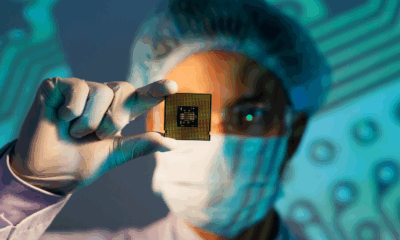
Hospitals are beginning to deploy quantum-enabled sensors that can detect minute biological changes such as early cancer biomarkers or subtle cardiac irregularities long before traditional tests pick them up. By combining quantum precision with AI-driven analytics, this breakthrough promises a new era of proactive medicine, shifting healthcare from treatment to true prevention. K Dass investigates.
Quantum sensors harness the principles of quantum mechanics superposition, entanglement, and extreme sensitivity to magnetic and molecular signals to measure biological changes at scales previously thought impossible. Unlike conventional diagnostic tools, which often rely on detecting disease once symptoms are present or biomarkers reach measurable thresholds, quantum sensors can pick up faint signals at the earliest stages of disease development.
Researchers at Johns Hopkins University have demonstrated quantum sensors capable of detecting subtle molecular vibrations, paving the way for identifying cancer biomarkers before tumours become clinically visible. This approach could revolutionize oncology, where survival rates are closely tied to how early the disease is detected.
Cardiac Care with Quantum Precision
Cardiology is another field poised to benefit. Quantum magnetometers are being used in magnetocardiography (MCG), a technique that measures the magnetic fields generated by heart activity. Unlike traditional electrocardiograms, quantum-enabled MCG can detect irregularities in cardiac rhythms with far greater sensitivity. Bosch Quantum Sensing, for instance, is developing portable devices that could allow hospitals to monitor patients for arrhythmias or ischemic changes long before they manifest as symptoms.
Such innovations could transform cardiac care from crisis response to continuous monitoring, enabling interventions before damage occurs.
AI as the Interpreter
The extraordinary sensitivity of quantum sensors produces vast amounts of complex data. Artificial intelligence plays a crucial role in interpreting these signals, distinguishing between normal biological variations and early indicators of disease. Quantum machine learning models are being explored to accelerate this process, ensuring that clinicians receive actionable insights rather than overwhelming streams of raw data.
Hospitals Leading the Shift
Hospitals adopting quantum-enabled diagnostics are positioning themselves at the forefront of preventive medicine. Instead of waiting for patients to present with symptoms, clinicians could proactively screen populations, identify risks earlier, and tailor interventions to individual needs. This shift promises not only improved patient outcomes but also reduced healthcare costs by minimizing late-stage treatments.
Challenges and Opportunities
Despite the promise, challenges remain. Quantum devices are expensive and technically complex, requiring further refinement before widespread adoption. Clinical trials are essential to validate their effectiveness across diverse populations. Yet, as costs fall and technology matures, quantum sensing is expected to become a cornerstone of modern healthcare.
Quantum sensors can detect biological signals at scales previously invisible to MRI or CT scans, enabling earlier diagnosis of cancer, Alzheimer’s, and cardiovascular disease.
Pilot Projects in Asia & Europe Quantum sensing is already being trailed in the UK under the National Institute for Health and Care Research (NIHR) Innovation Observatory, focusing on early detection of neurodegenerative diseases and cardiac irregularities. In Singapore, researchers are exploring quantum-enhanced imaging for precision diagnostics, while European labs are testing quantum magnetometers for brain activity mapping.