This article has been fact-checked by Dr Tang Zhi Hao, Senior Consultant Orthopaedic Surgeon, Singapore.
About the Doctor
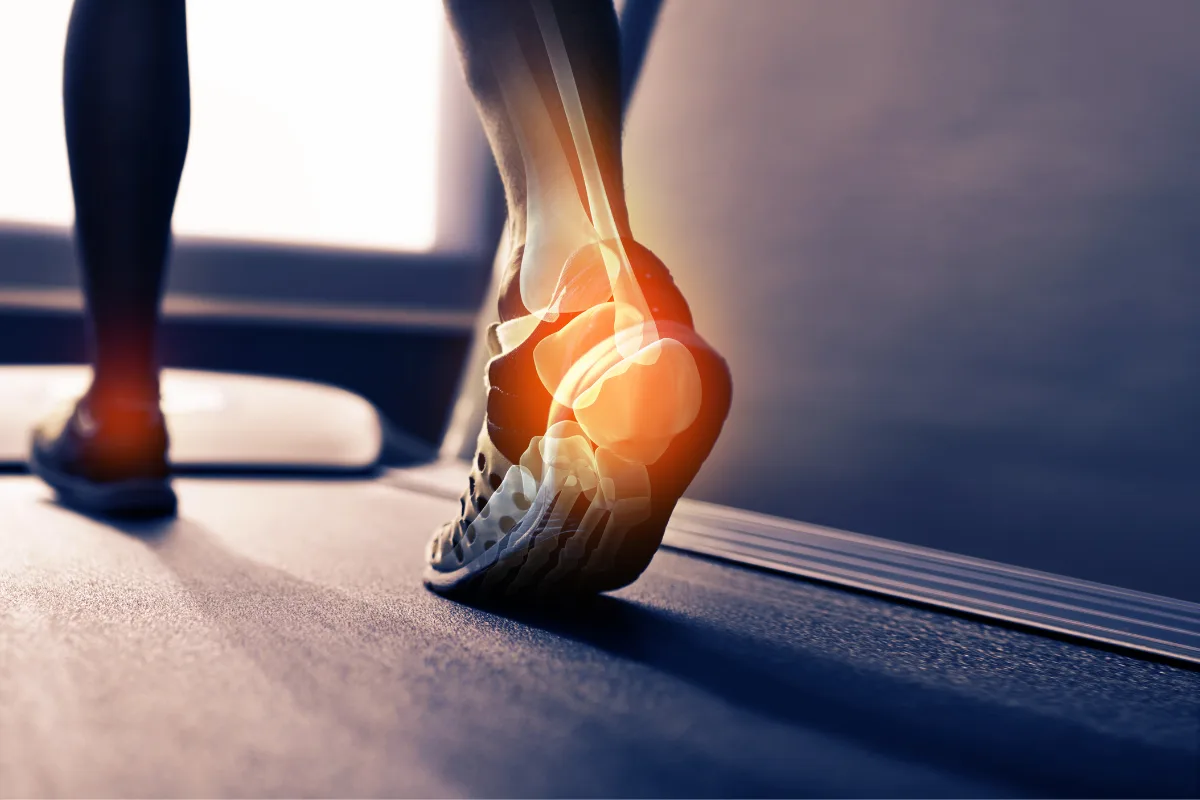
Heel pain is a common issue with multiple possible underlying causes ranging from simple overuse to stress fractures. For appropriate management of symptoms, it is important to determine the root cause of your pain.
Why does heel pain occur?
Heel pain is usually triggered by overuse, improper footwear, or sudden change in physical activity. To identify the underlying cause, doctors need to assess the precise location and the type of discomfort it is causing.
Causes of heel pain can be classified as:
- Plantar fasciitis (inflammation of the plantar fascia)
- Stabbing pain at the bottom of heel; hurts more when getting out of bed
- Achilles tendonitis (overuse of Achilles tendon)
- Pain behind the ankle; gets worse with running, jumping, or climbing stairs
- Stress fracture (hairline crack due to repetitive stress)
- Deep heel pain that worsens with weight-bearing activity
- Heel bursitis (inflammation of a fluid-filled bursa near the heel)
- Deep, aching pain; fluid-filled sac at the back of heel gets inflamed
What are the risk factors?
- Physical: Tight calf muscles, obesity, flatfoot, thinning of the heel pad due to ageing
- Lifestyle: High-impact sports, skipping warm-ups or stretches, improper footwear
- Occupational: Prolonged standing on hard floors, professions that require constant standing
- Medical: Nerve compression, inflammatory arthritis, chronic illnesses
Why does it hurt more while walking or running?
Heel pain worsens during walking or running because:
- The plantar fascia (tight tissue present at the bottom of foot) pulls and stretches during weight bearing activity, and repetitive stress on the tissue may lead to pain and inflammation.
- The calf muscles tighten during activity, which in turn tugs the Achilles tendon (tendon connecting calf muscles and heel bone) and can contribute to heel pain.
- A stress fracture can become more painful with repetitive weight-bearing, which may also delay healing.
Can everyday habits make heel pain worse?
Yes. Certain daily habits can place additional stress on the heel and worsen symptoms.
- Walking barefoot on hard floors
- Wearing unsupportive footwear
- Standing for long periods
- Skipping stretching before workout
- Pushing through the pain
What can I do to stop the pain at home?
Conservative treatment focuses on reducing inflammation, relieving heel stress, and improving flexibility. You may try these strategies to get relief:
- Massage the heel gently
- Avoid walking barefoot
- Ice the heel area to reduce swelling
- Use footwear that supports your heel
- Do calf and foot stretches to loosen your muscles
- Take a break from long walks, running, or prolonged standing
Will the pain go away on its own?
Most people improve within a few months with appropriate conservative treatment. The duration of recovery depends on the underlying cause, severity of symptoms, activity level, and adherence to treatment. However, if you continue wearing unsupportive footwear or put continuous stress on the heel, the problem may continue.
When should you see a doctor?
Visit a doctor if:
- You cannot put weight on your foot.
- Pain starts right after a hard fall, twist, or a loud pop sound.
- You notice numbness, weakness, swelling, or redness in your foot.
- Your pain worsens or there is no improvement, even after conservative treatment.
Key takeaways
- Heel pain may be caused by plantar fasciitis, Achilles tendonitis, heel bursitis, or stress fracture.
- Prolonged standing on hard floors, unsupportive footwear, and repetitive strain worsens the pain.
- Most cases improve with conservative treatment and activity modification.
- Consult a doctor if your symptoms do not improve or your pain worsens despite conservative treatment.
Conclusion
Recovery can take time; early treatment and appropriate footwear may help improve symptoms and prevent recurrence. Consult your doctor to accurately diagnose the root cause of your pain and to develop a personalised recovery plan.
Sources to read
- Sharma A, Sidiq M, Sharma J, et al. Predictors of heel pain among healthy street vendors in Delhi: a cross-sectional study. Sci Rep. 2025;15:39562. doi:10.1038/s41598-025-25236-5
- Deshmukh A, Patil DP. Prevalence Of Heel Fat Pad Syndrome In Prolonged Standing Population. International Journal of Environmental Sciences. Published online September 25, 2025:1633-1642. doi:10.64252/5s96qz92
- Allam AE, Chang KV. Plantar Heel Pain. In: StatPearls. StatPearls Publishing; 2026. Accessed July 22, 2026. http://www.ncbi.nlm.nih.gov/books/NBK499868/
- Restivo J. Plantar fasciitis: Symptoms, causes, and treatments. Harvard Health. November 3, 2023. Accessed July 22, 2026. https://www.health.harvard.edu/pain/plantar-fasciitis-symptoms-causes-and-treatments