






News
Printing Organs

The global shortage of donor organs has left millions waiting for lifesaving transplants. But in research labs from Boston to Beijing, scientists are using 3D bio-printing to create living tissues with bio-inks made of human cells. These innovations once where science fiction are now producing skin grafts, cartilage, and even experimental heart tissue, offering hope that one day, organ waiting lists could disappear. K Dass discovers that printed organs are functionable.
In 2019, researchers at Tel Aviv University stunned the medical world by unveiling a 3D-printed heart complete with cells, blood vessels, and chambers. Though only the size of a rabbit’s heart and not yet functional for human use, it marked a milestone: the first-time scientists had successfully printed a vascularized organ using a patient’s own cells.
Since then, progress has accelerated. In the United States, companies like Organovo have pioneered bio-printed liver tissue for drug testing, while Wake Forest Institute for Regenerative Medicine has developed bio-printed skin grafts for burn victims. These grafts, layered with living cells, are designed to integrate seamlessly with the patient’s body, reducing rejection risks.
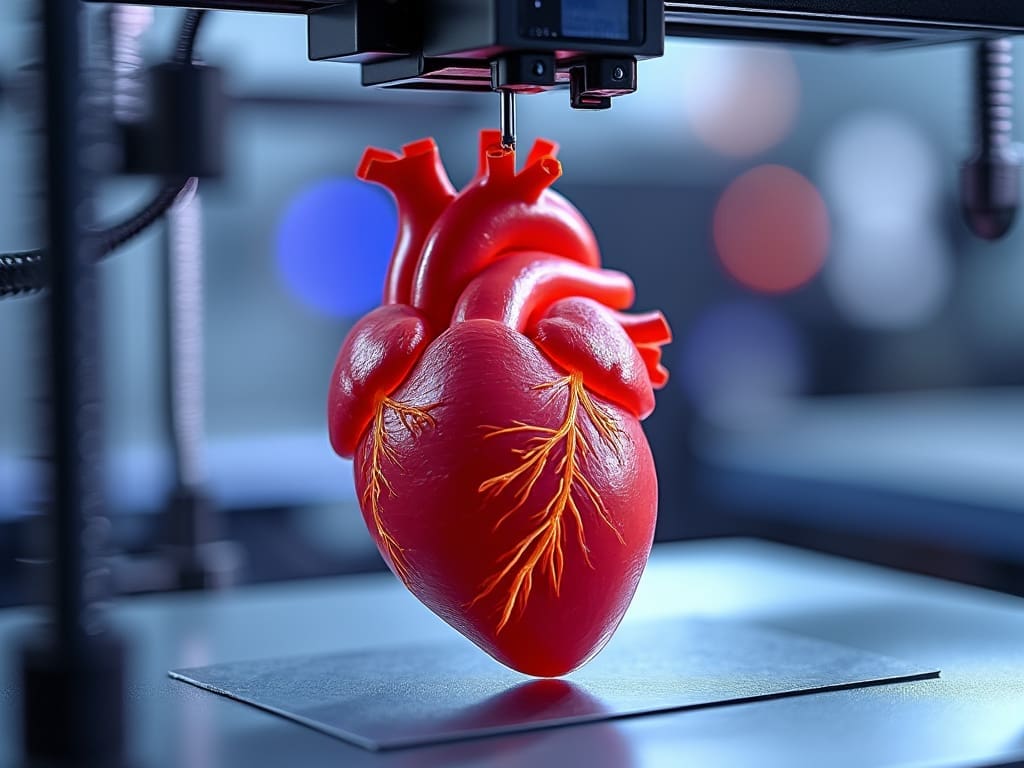
What Is 3D Bioprinting?
Process: Uses specialized printers to deposit layers of bio-ink (living cells + biomaterials) to build tissue-like structures.
Goal: Replicate the architecture and function of human organs, including blood vessels, nerves, and extracellular matrices.
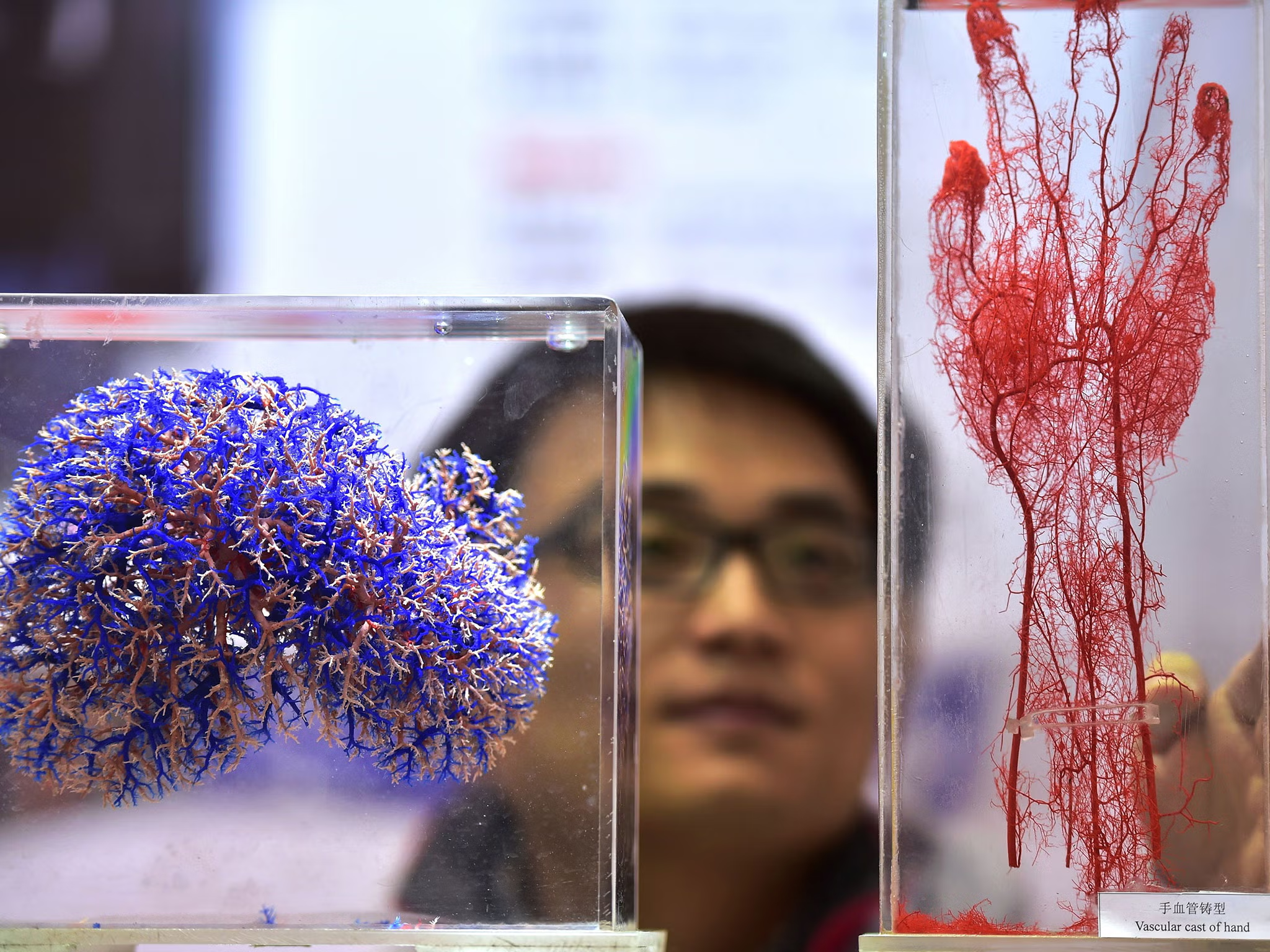
Key innovation: Designing vascular networks inside printed tissues to sustain life by delivering nutrients and oxygen.
China has also emerged as a leader in bio-printing. In 2022, researchers at Sichuan University announced they had printed functional cartilage tissue for reconstructive surgery. Meanwhile, Singapore’s National University Health System has invested in bio-printing platforms to explore kidney tissue models, aiming to address Asia’s rising demand for renal transplants.
The technology hinges on bio-inks mixtures of living cells, growth factors, and biomaterials that mimic the extracellular matrix. By layering these inks with precision, printers can replicate the complex architecture of human tissue. One of the greatest challenges remains vascularization: ensuring that printed organs have networks of blood vessels to deliver oxygen and nutrients. Without this, tissues cannot survive beyond the lab.
Yet, breakthroughs are emerging. In 2023, researchers at Harvard’s Wyss Institute developed a technique to print vascular channels inside tissues, allowing blood to flow through bio-printed constructs. This innovation is seen as a critical step toward printing full-sized, transplantable organs.
Current Applications
- Skin grafts: Bio-printed skin is already being tested for burn victims and wound healing.
- Cartilage & bone: Used in orthopaedic research for reconstructive surgery.
- Mini-organs (“organoids”): Liver and kidney tissue models help test drugs and study disease progression.
- Experimental heart tissue: Scientists have printed patches of beating cardiac tissue, a step toward repairing damaged hearts.
Beyond transplants, bio-printing is already transforming drug development. Pharmaceutical companies are using bio-printed liver and kidney tissue to test toxicity, reducing reliance on animal models and speeding up clinical trials. For patients, this means safer drugs reaching the market faster.
Still, challenges remain. Scaling up from small tissue patches to full organs like kidneys or hearts requires immense precision and resources. Ethical questions also loom: who will have access to printed organs, and how will costs be managed? Regulators, including the U.S. Food and Drug Administration, are beginning to draft frameworks for bio-printed implants, but widespread clinical use is likely a decade away.
For patients like those on dialysis or awaiting heart transplants, the promise of bio-printing is profound. As Dr. Anthony Atala of Wake Forest put it, “We are moving from science fiction to science fact. The day will come when we can print organs on demand.”
Sources: Tel Aviv University (2019, 3D-printed heart breakthrough); Organovo (bio-printed liver tissue); Wake Forest Institute for Regenerative Medicine; Harvard Wyss Institute (vascular bio-printing, 2023); Sichuan University (cartilage bio-printing, 2022); National University Health System Singapore.